Showing posts with label Investment Classics. Show all posts
Showing posts with label Investment Classics. Show all posts
Sunday, 20 May 2018

Wednesday, 18 April 2018
Think Ten
| by Raoji |
Charlie Munger, and I .... In buying a $34 billion business like Burlington Northern , we have never talked about the day's news or what's going,. We're looking at where the business is going to be 10 years from now because we're going to own it then. That's where it counts.— Bond Lady (@wideclops) April 18, 2018
Tuesday, 31 October 2017
10th Std Pass, Market Wizard from Thrissur
Summary
1. 10th class pass - more education seems to be a disadvantage with trading
Perhaps, lack of higher education is what made him a small player relative to other players like Rakesh Jhunjhunwala or Mankekar. He may not have the 'theoretical' background to succeed further.
2. Risk Management
Also, from when I started, I have made sure that only a small portion (1 to 3%) of my net-worth is used for trading, I guess that is the money management rule that you are asking me for.
MAY 22, 2014CATEGORY: Winners - 60 day challenge
Traders,
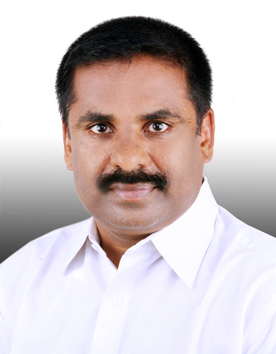
After putting up the first five interviews of some of our top traders and winners of the Zerodha 60 day Challenge, I was asked many times if engineers have better odds to win at trading, as each one of the five featured until now came from a similar background. The search to break the pattern amongst our winners ended at Joby, a 10th standard pass-out from a small town in Kerala with no access to fancy tools or resources, who has still managed to be up over 300% from active F&O trading in the last couple of years trading at Zerodha. His winnings from the market runs into crores over the many years trading F&O actively. I had to use a translator as the only language he speaks is Malayalam.
Following is my interaction with Joby.
Name: Joby Age: 47 Years
Running a Bakery to Trading full time. How did that happen?
I was running my own Bakery in the early 1990′s and had people visiting the shop regularly after trading at the Cochin Stock Exchange. The bug bit me and without any knowledge of capital markets, I quit my bakery business to become a full time equity trader. Until 2000, my trading was only in equities and I started trading F&O when it was introduced in 2001. I am thankful to God that the risk I took by shutting down my bakery worked out well for me.
How much money did you start off with?
It all started with just around Rs 500 back when I started and today whatever I have made is all out of that Rs 500. Over a period of 22 years, I have also taken profits out of trading and invested into other avenues, and that trade also has worked out very well.
Investment into other avenues? Why not into stocks?
I have always traded the markets, but all my investments till date have never been in stocks. I guess the reason for this is because it is very tough to trade and invest at the same time, I was never comfortable doing that. For example, I am shorting Nifty futures because I am feeling bearish, but what do I do with the stocks that I am holding for long term–hold or sell? It is very easy to say that you will hold for long term, but such scenarios where there is indecision or time taken can be detrimental to the outcome of your trade.
What do you trade on, mostly? Are they intraday or positional?
I have mostly been trading options from when it was introduced on NSE in 2000, and almost all of it shorting/writing options. I usually hold the positions overnight and sometimes take intraday trades as well.
Why mostly option writing?
I feel options give higher flexibility and shorting options inherently improves the winning odds as long as you have a risk management policy to cover when you are wrong, as the losses writing options can be unlimited. The opportunity to profit from trading options prior to 2010 was much higher.
What is your risk management policy/money management rule?
I haven’t ever had any big losses from the time I started trading and you will be surprised to know that I don’t really have a risk management policy as such. I don’t have fixed stop losses, I average my position when in loss, I go against the trend, break many rules that a lot of analysts keep shouting out on TV asking to follow. One of those things I do though is that when I take a wrong trade that was not intended to, I immediately book the loss if any and try to stay away from trading on that particular day.
Also, from when I started, I have made sure that only a small portion (1 to 3%) of my net-worth is used for trading, I guess that is the money management rule that you are asking me for.
So what about the trading strategy, how do you enter or exit?
It is based on support and resistance, I wait with a lot of patience for market to show a range and when it displays the same, I start writing options which will benefit if the market stays within the range. Most of these trades typically are hedged because I would be shorting calls and puts at the same time so that I can benefit from both the calls and puts premium losing its value when in the range. From the time India VIX was launched in 2009, I also keep a tab on it to decide how aggressive I should be writing options, the best times being when value of VIX is relatively higher.
When convinced that the range is getting broken, I will start taking single sided trades either long or short and these could sometimes be plain long options or buying/selling futures. I also as a rule completely avoid writing naked put options.
How do you determine this support and resistance in charts?
I don’ t follow any technical analysis or look at any charts. To be very honest I don’t even know how to use computers properly. But all the years I have been trading actively, I have spent countless hours looking at the terminal on how Nifty prices move. If the market is trading, I am looking at the screen if I am in a trade or not. I have my own unique way of calculating the resistance and support just by watching and analyzing the price and volume. I don’t need to look at the chart for this, just a market depth window (Snap quote window) is enough.
Do you know that what you are saying sounds like “Tape Reading or Reading the Tape“?
As I said earlier, have studied only till 10th, don’t browse the internet, have never followed tips, don’t believe in stop losses, I am able to look at the symptoms of Nifty and predict if it will be in a range or breakout.
No stop loss? So how do you exit when in profits or losses?
It is based on how I feel about my trade with respect to how the markets are moving. I don’t really have preset exit points and there have been many times where I have averaged when the price has gone against my trade. I will book a loss or profit based on my conviction of the trade.
What do you do when not trading?
My routine is working out in the morning, playing football and going on family vacations with my wife Seena and two kids once or twice every year.
It is a special achievement to be up so much trading actively on F&O, any plans to scale up in the future?
I love what I am doing presently which is trading but not very aggressively, and wish to continue the same. Also before we end the conversation, I want to thank Zerodha for putting up a very unique initiative like the 60 Day Challenge that gives additional motivation to profit and be amongst the winners.
____________________________________________________________
I quizzed Joby for quite a while trying to figure out on how he determines the range, support and resistance and if there was any method to it. I was also astonished that he remembered the exact expiry settlement prices for almost the last 10 years. I could only conclude that he has a special skillset and importantly also the discipline to go along with it. For all the naysayers of “Tape Reading”, Joby proves it can be done and I think a critical element to his success is also the fact that only a small portion of his networth is used for trading, that in itself is his risk/money management rule.
Wishing Joby all the best,
If you haven’t taken up the 60 day challenge yet, visit here to know more and get started.
Nithin Kamath
Founder & CEO @ Zerodha, team working towards breaking all barriers that I personally faced as a retail trader for over a decade. Love playing poker, basketball, and guitar. Getting body fat % in single digit is the next personal endeavor :) .
https://zerodha.com/z-connect/zerodha-60-day-challenge/winners/10th-std-pass-market-wizard-from-thrissur
1. 10th class pass - more education seems to be a disadvantage with trading
Perhaps, lack of higher education is what made him a small player relative to other players like Rakesh Jhunjhunwala or Mankekar. He may not have the 'theoretical' background to succeed further.
2. Risk Management
Also, from when I started, I have made sure that only a small portion (1 to 3%) of my net-worth is used for trading, I guess that is the money management rule that you are asking me for.
MAY 22, 2014CATEGORY: Winners - 60 day challenge
Traders,
After putting up the first five interviews of some of our top traders and winners of the Zerodha 60 day Challenge, I was asked many times if engineers have better odds to win at trading, as each one of the five featured until now came from a similar background. The search to break the pattern amongst our winners ended at Joby, a 10th standard pass-out from a small town in Kerala with no access to fancy tools or resources, who has still managed to be up over 300% from active F&O trading in the last couple of years trading at Zerodha. His winnings from the market runs into crores over the many years trading F&O actively. I had to use a translator as the only language he speaks is Malayalam.
Following is my interaction with Joby.
Name: Joby Age: 47 Years
Running a Bakery to Trading full time. How did that happen?
I was running my own Bakery in the early 1990′s and had people visiting the shop regularly after trading at the Cochin Stock Exchange. The bug bit me and without any knowledge of capital markets, I quit my bakery business to become a full time equity trader. Until 2000, my trading was only in equities and I started trading F&O when it was introduced in 2001. I am thankful to God that the risk I took by shutting down my bakery worked out well for me.
How much money did you start off with?
It all started with just around Rs 500 back when I started and today whatever I have made is all out of that Rs 500. Over a period of 22 years, I have also taken profits out of trading and invested into other avenues, and that trade also has worked out very well.
Investment into other avenues? Why not into stocks?
I have always traded the markets, but all my investments till date have never been in stocks. I guess the reason for this is because it is very tough to trade and invest at the same time, I was never comfortable doing that. For example, I am shorting Nifty futures because I am feeling bearish, but what do I do with the stocks that I am holding for long term–hold or sell? It is very easy to say that you will hold for long term, but such scenarios where there is indecision or time taken can be detrimental to the outcome of your trade.
What do you trade on, mostly? Are they intraday or positional?
I have mostly been trading options from when it was introduced on NSE in 2000, and almost all of it shorting/writing options. I usually hold the positions overnight and sometimes take intraday trades as well.
Why mostly option writing?
I feel options give higher flexibility and shorting options inherently improves the winning odds as long as you have a risk management policy to cover when you are wrong, as the losses writing options can be unlimited. The opportunity to profit from trading options prior to 2010 was much higher.
What is your risk management policy/money management rule?
I haven’t ever had any big losses from the time I started trading and you will be surprised to know that I don’t really have a risk management policy as such. I don’t have fixed stop losses, I average my position when in loss, I go against the trend, break many rules that a lot of analysts keep shouting out on TV asking to follow. One of those things I do though is that when I take a wrong trade that was not intended to, I immediately book the loss if any and try to stay away from trading on that particular day.
Also, from when I started, I have made sure that only a small portion (1 to 3%) of my net-worth is used for trading, I guess that is the money management rule that you are asking me for.
So what about the trading strategy, how do you enter or exit?
It is based on support and resistance, I wait with a lot of patience for market to show a range and when it displays the same, I start writing options which will benefit if the market stays within the range. Most of these trades typically are hedged because I would be shorting calls and puts at the same time so that I can benefit from both the calls and puts premium losing its value when in the range. From the time India VIX was launched in 2009, I also keep a tab on it to decide how aggressive I should be writing options, the best times being when value of VIX is relatively higher.
When convinced that the range is getting broken, I will start taking single sided trades either long or short and these could sometimes be plain long options or buying/selling futures. I also as a rule completely avoid writing naked put options.
How do you determine this support and resistance in charts?
I don’ t follow any technical analysis or look at any charts. To be very honest I don’t even know how to use computers properly. But all the years I have been trading actively, I have spent countless hours looking at the terminal on how Nifty prices move. If the market is trading, I am looking at the screen if I am in a trade or not. I have my own unique way of calculating the resistance and support just by watching and analyzing the price and volume. I don’t need to look at the chart for this, just a market depth window (Snap quote window) is enough.
Do you know that what you are saying sounds like “Tape Reading or Reading the Tape“?
As I said earlier, have studied only till 10th, don’t browse the internet, have never followed tips, don’t believe in stop losses, I am able to look at the symptoms of Nifty and predict if it will be in a range or breakout.
No stop loss? So how do you exit when in profits or losses?
It is based on how I feel about my trade with respect to how the markets are moving. I don’t really have preset exit points and there have been many times where I have averaged when the price has gone against my trade. I will book a loss or profit based on my conviction of the trade.
What do you do when not trading?
My routine is working out in the morning, playing football and going on family vacations with my wife Seena and two kids once or twice every year.
It is a special achievement to be up so much trading actively on F&O, any plans to scale up in the future?
I love what I am doing presently which is trading but not very aggressively, and wish to continue the same. Also before we end the conversation, I want to thank Zerodha for putting up a very unique initiative like the 60 Day Challenge that gives additional motivation to profit and be amongst the winners.
____________________________________________________________
I quizzed Joby for quite a while trying to figure out on how he determines the range, support and resistance and if there was any method to it. I was also astonished that he remembered the exact expiry settlement prices for almost the last 10 years. I could only conclude that he has a special skillset and importantly also the discipline to go along with it. For all the naysayers of “Tape Reading”, Joby proves it can be done and I think a critical element to his success is also the fact that only a small portion of his networth is used for trading, that in itself is his risk/money management rule.
Wishing Joby all the best,
If you haven’t taken up the 60 day challenge yet, visit here to know more and get started.
Nithin Kamath
Founder & CEO @ Zerodha, team working towards breaking all barriers that I personally faced as a retail trader for over a decade. Love playing poker, basketball, and guitar. Getting body fat % in single digit is the next personal endeavor :) .
https://zerodha.com/z-connect/zerodha-60-day-challenge/winners/10th-std-pass-market-wizard-from-thrissur
My Interview with Morgan Housel
Oct 31, 2017 11:51 am | Vishal Khandelwal
 I sincerely believe in what Charlie Munger often says about envy, that it is a really stupid sin because it’s the only one you could never possibly have any fun at. I am lucky to have stayed away from this sin as far as investing and other aspects of life are concerned.
Note: This interview was originally published in the April 2017 issue of our premium newsletter – Value Investing Almanack (VIA). To read more such interviews and other deep thoughts on value investing, business analysis and behavioral finance, click here to subscribe to VIA.
I sincerely believe in what Charlie Munger often says about envy, that it is a really stupid sin because it’s the only one you could never possibly have any fun at. I am lucky to have stayed away from this sin as far as investing and other aspects of life are concerned.
But if there is one, and just one, person who arouses this sin in me every time I read him is…Morgan Housel. And it’s for the simplicity of his thoughts that he puts across through his powerful writings. I have tried to emulate Morgan several times in my writing endeavor, but he raises the bar each time he publishes something new, more simple yet more powerful.
Morgan’s posts at The Collaborative Fund, where he is currently a partner, have been a great source of learning for me. I have also read him for years at his earlier stints at The Motley Fool and The Wall Street Journal.
Morgan is a two-time winner of the Best in Business award from the Society of American Business Editors and Writers and a two-time finalist for the Gerald Loeb Award for Distinguished Business and Financial Journalism. He was selected by the Columbia Journalism Review for the Best Business Writing 2012 anthology. In 2013, he was a finalist for the Scripps Howard Award.
In this interview, Morgan shared with me his simple investing thought process, what gets most people into trouble in investing, and the people who have inspired him the most in his journey.
Let’s get started right here.
Safal Niveshak (SN): Tell us a little about your background, how you got interested in writing and investing, and how you have evolved in these fields over the years?
Morgan Housel (MH): I started in college in investment banking. I always loved investing and knew I wanted to do it as a career. But the culture of investment banking totally put me off. I like to have time to think things through, and any culture that emphasizes 24/7 speed and fixed process over deliberation is one where I wouldn’t do well at. So, I moved on pretty quickly from that.
I then got into private equity, which I enjoyed. But this was summer of 2007, and global credit markets started freezing up, which is devastating for private equity firms that own highly leveraged companies. So, I needed to do something else.
A friend of mine wrote for the Motley Fool and said I should give it a shot. I never thought I’d be a writer, and I majored in economics in college, which meant I didn’t write much at all. But I applied, thinking a) they wouldn’t hire me, and b) if they did I would do it for six months before I found another private equity job. I ended up staying for 9 years and fell in love with the process of writing about investing.
Two years ago, I met a guy named Craig Shapiro from Collaborative Fund, a venture capital fund. We hit it off right away. Even though we come from very different backgrounds we see the world through a similar lens. I joined Collaborative Fund nine months ago and it’s been an amazing team to work with.
How has my writing evolved? Whenever you do something for 10 years you’d think it’d get easier. But writing has become much harder for me. I’ve written 3,500 articles, which means all the low-hanging fruit is long picked. It’s much harder for me to come up with ideas than it was, say, five years ago. So, I’ve slowed down as a writer. If I used to write 10 articles a week, now I write one or two. Now the stuff I write is generally deeper and longer, but every year it gets harder to come up with new ideas and topics.
Also, I’ve just become much more sceptical over time. That’s probably the biggest change in my writing.
SN: That’s an interesting journey you have travelled, Morgan. Anyways, as much as I understand, you aren’t a full-time investor nor do you manage other people’s money. How do you manage your own money? Is it through direct stock picking, or mutual funds, or both?
MH: My entire net worth is a house, a checking account, and the Vanguard Total Stock Market Index. I don’t think investing needs to be complicated so I keep it as simple as I possibly can. The fewer knobs you have to fiddle with the fewer opportunities you have to screw up over time.
SN: Wonderful! That’s as simple as it could get. What’s your broad investment philosophy? Has your philosophy changed much through the years? If yes, how?
MH: My broad philosophy is that investors are their own worst enemies, and the real key to good investing over time has little to do with the investments you pick and lots to do with how you manage your behavior.
Financial journalists spend years quibbling over investing strategies that might improve your returns by, say, 50 basis points a year, and then a financial crisis hits, people are forced to sell stocks to pay their bills or keep their sanity, which ends up costing them 400+ basis points a year. It’s so clear which one matters more.
To me the evidence is overwhelming that if you spend 10% of your investing energy on picking a portfolio and the other 90% on focusing on keeping your emotions in check, putting market volatility into proper context and doing everything you can to take a long-term view, you’ll end up doing better than the majority of investors.
SN: It’s good you talked about emotions, and how it is a huge mistake investor make falling into emotional traps time and again. When you look back at your own investment mistakes, were there any common elements of themes?
MH: Overconfidence. That’s true for most people and I was no different. At various points in my career, I thought I was cleverer than I was or had more insight than I did. The few times it “worked” was likely due to luck. More often it just didn’t work.
Some people are very good at certain segments of active investing. But everyone, no matter how they invest, must fight overconfidence. It’s pervasive and is probably the second-largest cause of investing regret, after ignorance.
SN: When it comes to direct stock picking, the worst problems investors get them into is by falling into behavioural biases. How has been your experience on this front? What tricks do you use to minimize mistakes of behavioural biases? What are the most common behavioural mistakes you make, apart from overconfidence that you mentioned earlier?
MH: This might sound like a weird comparison, but it’s one I think about a lot. I vividly remember on September 11 2001, looking out the window and thinking about the amount of suffering that was going on at that very moment. It’s a weird feeling to know that thousands of people are suffering at a specific spot in real time, in a way that you can accurately visualize, rather than a hypothetical. It just melts your mind.
In 2008 and 2009 I remember having a similar feeling, thinking about all the people who at that very moment were taking actions that would affect them for the rest of their lives — selling when stocks were cheap in a way that would almost certainly impact their ability to ever retire.
Of course, the impact was orders of magnitude less than 9/11, but I had the same strange feeling of thinking about the number of people who, at that very moment in October 2008, were experiencing something that would hurt them the rest of their lives. It felt strange. That’s when I started getting really interested in the behavioral side of investing. I see about 80% of investing as a psychology game.
The big takeaway from 2008 and 2009 was how quickly your own actions could harm the rest of your financial life. It really came down to understanding your own risk tolerance and how that fit into your time horizon. Panic selling is the most common behavioral mistake in investing.
For me, fighting it has been a combination of holding a lot of cash and studying market history. But there’s no easy solution to behavioral biases. These things have millions of years of evolution backing them up. The best you can do is be honest with yourself about your goals and your tolerance for decline.
SN: Okay, what’s the behavioural mistake with the biggest impact that’s the least understood or noticed?
MH: How people think about fees are probably the least-noticed bias.
Most investors don’t actually write a check for their fees. They’re deducted from your fund or investment account automatically. When something is so out of sight, out of mind, you don’t pay rational attention to them in the same way you do, say, the price of a gallon of gasoline.
The result is that investment fees may be one of the largest — if not the largest — annual expenses for upper-middle-class households. A couple nearing retirement with $800,000 in mutual funds could easily pay 1% in fund fees, 1% to a financial advisor, and 0.5% in trading and other costs. So, 2.5% in fees on $800,000 is $1,666 a month — an amount that is very real but for which the customer never actually sees or pays an actual bill. For perspective, the average mortgage payment in America is about $1,300 a month.
A lot of financial advisors earn their fees, especially if they can manage a client’s emotions and endurance. But the way investment fees are structured means people end up paying way, way, way more than they would for other service-based products.
SN: How can an investor improve the quality of his/her decision making? Does maintaining a journal help? What has been your experience in improving your own decision making over the years?
MH: Most medical doctors still go to a doctor to get their own check-up. Investors should do the same. Even if you don’t have a financial advisor I think it’s important for all investors to bounce their ideas off trusted advisors — friends, mentors, family, whatever.
Robert Shiller once said, “You have to understand that your own thoughts are not really your own thoughts.” Everything you know is a product of the people you’ve met and the experiences you’ve had, most of which were out of your control. That’s always stuck with me. It’s a reminder of how hard independent thinking is, and how important it is to hear out the views and thoughts of a diverse group of outside experts.
SN: That’s a very pertinent point you made, that independent thinking is hard. Now, with so much noise all around, it’s become terribly hard. With traditional media, TV, bloggers, twitter, etc., there’s so much information flow these days. It can feel overwhelming. How do we go about curating signal from noise?
MH: I’d think about two things.
One, when someone on TV says (or a journalist writes), “You should do X with your money,” stop and think: How do you know me? How do you know my goals? How do you know my short-term spending needs? How do you know my risk tolerance? Of course, they don’t. Which means you shouldn’t pay much attention to it. Personal finance is very personal, which means broad, general, advice can be dangerous.
For media, I’m most interested in historical finance, which helps put investing into proper context, and behavioral finance, which lets you frame investing based around your own goals, flaws, and skills. But taking direct advice from someone who has never met you is asking for trouble (this includes me).
SN: How do you think about risk? How do you employ that in your investing?
MH: I have two definitions of risk –
- Risk is the odds that you won’t be able to do something in the future that you reasonably need to do to keep yourself happy.
- From Carl Richards: “Risk is what’s left over when you think you’ve thought of everything else.”
The first is a reminder that risk is different for everyone, and is highly dependent on your time horizon.
The second is a reminder of how hard risk is to think about. Risk is, almost by definition, the stuff we aren’t thinking about.
SN: Indeed! Anyways, if you had just two-minutes to advise someone wanting to get into investing, what would your advice be? What are the biggest pitfalls he/she must be aware of?
MH: Keep it simple. Don’t try to be a hero. Compounding takes a lot of time. Volatility is the cost of admission for high long-term returns. That’s the message I’d get across. It’s simple but encompasses the majority of what you need to know.
SN: What are the most important qualities an investor needs to survive the complexity of the financial markets?
MH: I think it’s a combination of humility and a fine-tuned bullshit detector.
You need humility to prevent yourself from overcomplicating investing more than it needs to be and taking risks greater than you’re able to handle.
And you need a fine-tuned bullshit detector to protect yourself from the swarms of sales pitches and get-rich-quick schemes that plague the industry.
There are other things — a good grasp of basic arithmetic, delayed gratification, the ability to live below your means. But those first two are most important.
SN: You wrote a wonderful note in Feb. 2017 on getting vs staying rich. You mentioned about cultivating humility as the way to stay rich. If one is not humble by nature, can humility be cultivated?
MH: Yes — through humiliation. Lack of humility always catches up to you. Look, in markets, you’ll receive some return over the next 20 years, and most people who try to front-load those returns into shorter periods of time will cough up whatever excess short-term returns they earn down the road — reversion to the mean. It’s very similar with humility. Most ego you have today will be balanced out with humiliation down the road.
SN: Which investor/investment thinker(s) do you hold in high esteem?
MH: My top five include –
- Michael Batnick
- Ben Carlson
- Jason Zweig
- Craig Shapiro
- Brent Beshore
All have an incredible mix of insight and humility that is incredibly rare. They’re also just great people.
SN: You inspired many through your writings. Which are some of the books, blogs, and other resources on investing, behaviour, and multidisciplinary thinking that have inspired you the most over the years?
MH: This might sound odd, but I think reading about World War II has had the biggest impact on my thinking. There are few events in history that were as transformative and as well documented as World War II, so it’s just an incredible period to study to learn how people dealt with adversity, uncertainty, despair, and hope. The most accessible piece of content here is Ken Burns’ documentary, The War. It teaches you more about human behavior than anything else I’ve come across.
SN: If you were to give away all your books but one, which one would it be and why?
MH: Nassim Taleb’s book Antifragile is probably the book that I go back to the most. Taleb is a prickly personality but he’s an incredible writer and can explain complicated topics in easy-to-understand ways without dumbing it down at all. It’s a very hard skill and he’s mastered it. If you look past his ego and sharp personality I think he’s one of the smartest thinkers around today. Or at least he’s a very smart thinker and an excellent communicator.
SN: Hypothetical question: Let’s say that you knew you were going to lose all your memory the next morning. Briefly, what would you write in a letter to yourself, so that you could begin relearning everything starting the next day?
MH: I love the hypothetical question, but I think it’s impossible to relearn stuff in a planned way, since so much of what you know is based on past experiences that can’t be replicated. How do you teach someone about what it felt like to lose half your money in 2008? You can’t. You must experience it. Same for bubbles. No book can recreate the emotions of 1999.
But … I’d leave a list of 10 people to talk to, and I’d ask each of them for four or five hours of time where I sit them down and say, “Tell me the basics of your field that explain the majority of the outcomes.”
SN: What would you be doing if you weren’t writing and investing?
MH: I have no idea. I think I might enjoy teaching elementary school, but I’d probably get bored of teaching the same thing repeatedly. But if you strip out the career luck I’ve had and look at my academic background, I should probably be an accountant working 90 hours a week in a dark basement somewhere.
SN: What other things do you do apart from writing and investing?
MH: Mostly reading. I try to read more books and fewer articles. I’m also a growing fan of podcasts. And I try to walk a lot. We have a young son, so we sleep when we can — which isn’t much.
SN: That was brilliant, Morgan. Thank you so much for sharing your insights with Safal Niveshak readers. I wish you all the best for your work and life.
MH: Thanks Vishal! I hope your readers find this useful in some way.
Tuesday, 24 October 2017
If I am paranoid that I cannot lose, then I will get immobilised. I cannot take any risk: Rakesh Jhunjhunwala
1. I was more interested in the stock market. I found the stock market very intriguing because prices used to fluctuate, I used to wonder why the price fluctuates. My dad then used to try and explain to me and I got very interested and I decided at that age that I am going to make life in the stock market.
2. But you know stock market is like woman, always commanding, always mysteries, always uncertain, always volatile, always exciting. So if you want to perform well in the stock market… see stock markets is as much about psychology as about reality.
So unless you… I have a temperament where you can adjust to the stock market, you cannot succeed and the only king is the market. There are no other kings in the markets. All those try to become kings of the stock market, go to Arthur Road Jail.
So market is the king and you cannot have a good relationship with the woman by probating her. The only way you can have her is by respecting her, by understanding her, by adjusting with her. That is why market is like woman. I have two interests in life -- markets and women. Both are concerned with four letter words – markets with the risk and woman with love.
3. I not only take my work home, I take it into bed also. For me, markets are passion, an obsession and sometimes when I go on holiday, I disconnect. Otherwise, if I am in Bombay, it is on my mind 24 hours. I not only invest, I trade. For trading, I have to follow day to day news. It is so interesting and the interesting part is not so much the wealth. Wealth is important I think but… see, it is an ego battle. RK Laxman said it is the difference of opinion which makes the stock market interesting. For every buyer, there is a seller. For every seller, there is a buyer. So, I would like to know is my opinion going to be right or wrong?
4. They are only 9. I and Rekha is principally do not make any effort, in fact we want to say that they should not understand that we have money or that we are known and our circle of friends are all normal people. We have no celebrity friends or no rich friends. I have an ambition. I think wealth is not the source of all happiness. It is a means to an end. If they make lots of money, I will be happy; if one fellow wants to be a painter, I will be happy; if one fellow just wants to relax, I will be happy; if one fellow wants to be a painter, I will be happy; if one fellow just wants to relax, I will be happy. I give lots of importance to individualism. I want my children to be what they want to be and maybe if they ask me, I will try to guide them. If they would not ask me, I leave it to them
5. “We make our living by what we earn. We make our life by what we give ,“ that is what Churchill said and the other thing that Churchill said is an all-time great , which is very true for life that we have to lose many a battle to win the war that means lot of times in life you face difficulties, sometimes you have to withdraw, sometimes you have to give up in order that you have the strength to win.
6. Alia Bhatt: But can I ask you something. I know it is difficult but do you like to lose? Is it something that inspires you more or do you hate it? I hate losing.
Rakesh Jhunjhunwala: It is not a question. Nobody likes to lose but the reality is that there is no victory without loss. If there was no loss then how do you know that what would victory be. I think that I am not afraid to make a mistake, but only make one which I can afford. So that I may live to make another one. And if I am paranoid that I cannot lose, then I will get immobilised. I cannot take any risk. Though I do not mind losing but I must learn from that losing. And I must understand that there are certain things in life which are linked to human psychology where predictability is very low. Like which movie will be liked, which will not be liked. You cannot predict beyond a point. You are in a profession where uncertainty is built in. One thing in life is that rather than our own liking and disliking, let us understand what reality is and let us adjust to it. So, I am not afraid to lose.
https://economictimes.indiatimes.com/markets/expert-view/i-am-not-afraid-to-make-a-mistake-but-only-make-one-which-i-can-afford-rakesh-jhunjhunwala/articleshow/61161672.cms
2. But you know stock market is like woman, always commanding, always mysteries, always uncertain, always volatile, always exciting. So if you want to perform well in the stock market… see stock markets is as much about psychology as about reality.
So unless you… I have a temperament where you can adjust to the stock market, you cannot succeed and the only king is the market. There are no other kings in the markets. All those try to become kings of the stock market, go to Arthur Road Jail.
So market is the king and you cannot have a good relationship with the woman by probating her. The only way you can have her is by respecting her, by understanding her, by adjusting with her. That is why market is like woman. I have two interests in life -- markets and women. Both are concerned with four letter words – markets with the risk and woman with love.
3. I not only take my work home, I take it into bed also. For me, markets are passion, an obsession and sometimes when I go on holiday, I disconnect. Otherwise, if I am in Bombay, it is on my mind 24 hours. I not only invest, I trade. For trading, I have to follow day to day news. It is so interesting and the interesting part is not so much the wealth. Wealth is important I think but… see, it is an ego battle. RK Laxman said it is the difference of opinion which makes the stock market interesting. For every buyer, there is a seller. For every seller, there is a buyer. So, I would like to know is my opinion going to be right or wrong?
4. They are only 9. I and Rekha is principally do not make any effort, in fact we want to say that they should not understand that we have money or that we are known and our circle of friends are all normal people. We have no celebrity friends or no rich friends. I have an ambition. I think wealth is not the source of all happiness. It is a means to an end. If they make lots of money, I will be happy; if one fellow wants to be a painter, I will be happy; if one fellow just wants to relax, I will be happy; if one fellow wants to be a painter, I will be happy; if one fellow just wants to relax, I will be happy. I give lots of importance to individualism. I want my children to be what they want to be and maybe if they ask me, I will try to guide them. If they would not ask me, I leave it to them
5. “We make our living by what we earn. We make our life by what we give ,“ that is what Churchill said and the other thing that Churchill said is an all-time great , which is very true for life that we have to lose many a battle to win the war that means lot of times in life you face difficulties, sometimes you have to withdraw, sometimes you have to give up in order that you have the strength to win.
6. Alia Bhatt: But can I ask you something. I know it is difficult but do you like to lose? Is it something that inspires you more or do you hate it? I hate losing.
Rakesh Jhunjhunwala: It is not a question. Nobody likes to lose but the reality is that there is no victory without loss. If there was no loss then how do you know that what would victory be. I think that I am not afraid to make a mistake, but only make one which I can afford. So that I may live to make another one. And if I am paranoid that I cannot lose, then I will get immobilised. I cannot take any risk. Though I do not mind losing but I must learn from that losing. And I must understand that there are certain things in life which are linked to human psychology where predictability is very low. Like which movie will be liked, which will not be liked. You cannot predict beyond a point. You are in a profession where uncertainty is built in. One thing in life is that rather than our own liking and disliking, let us understand what reality is and let us adjust to it. So, I am not afraid to lose.
https://economictimes.indiatimes.com/markets/expert-view/i-am-not-afraid-to-make-a-mistake-but-only-make-one-which-i-can-afford-rakesh-jhunjhunwala/articleshow/61161672.cms
Saturday, 21 October 2017
Some Mistakes…
by Altais
So much has been written about vicarious learning i.e. learning from mistakes of others. It is humbling to admit that despite all the knowledge out there, I failed to learn vicariously. The purpose of writing this piece is to put down the learning’s (very expensive ones) over the last decade or so. I hope to smarten up in the future though.
Before writing about what did not work, it is important to set the context. There is no best or the right way to invest – investors have successfully generated huge returns from different investing strategies – be it buying and holding quality companies, chasing growth even at high valuations, buying cheap companies betting on turnarounds etc. People have made large amount of wealth by having concentrated as well as diversified portfolio. So investors have to explore what works for them, given their financial requirements, temperament, skill and time horizon.
Two important factors to consider while looking at the mistakes (and lessons) are:
Allocation strategy: diversified or concentrated. I go with a concentrated strategy so these mistakes are more relevant in that context.
Portfolio approach: It is important to look at the portfolio return and how the portfolio is structured. This is different from trying to maximize returns from each individual stock.
The major mistakes (with very high opportunity cost) made over the past years:
1. Selling good businesses too early: I typically sold out too early without giving due importance to long term growth outlook and the potential of the business to scale vis a vis the short term expensive valuation. Sundaram Finance, CRISIL and Gruh Finance are among the mistakes in this bucket. They went on to become multibaggers in the years ahead after the sale. Also these stocks were never cheap enough to be bought again. When you are too early into a stock (which is a good thing), your mind gets anchored to historical valuation range, without adjusting for new potential of the stock – either with better performance or increased market interest.
Lesson: If you are invested in a growing business, do not sell it for temporary overvaluation – there may be some time correction which is fine, which should be managed at a portfolio level. At the same time, one needs to be careful of slowing growth or fundamental deterioration in the business e.g. Exide Industries/ Shriram Transport Finance.
2. Going down the Quality curve: This is a derivation of the above (first) mistake. Mostly when I have sold out of good companies, which were growing well, I ended up investing in cheaper but low quality/ growth companies. Over the cycle, this resulted in sub optimal returns. E.g. Sold out of Page Industries and Indusind Bank, and invested in IDFC Bank/ IDFC Ltd.
In theory, it is logical to say – ‘What’s the sense in holding an overvalued company, when you don’t see making any money in the next 12-18 months. One should just sell it and invest in something where you can make good returns over the next 1-2 years’. Now that’s all good to say but in practice the challenges are:
a. When you sell and raise cash, there is a mental pressure to invest. The pressure increases with time and level of cash allocation. The market may move against you for a long time, and even if you get a correction, it may still be at a higher level than what you sold out at.
b. Because of the pressure, you end up investing in low quality companies. (Value traps, no growth, hope value trades, relatively cheap trades etc.)
3. Waiting for a little lower price to buy: This has been a very expensive lesson – losing 10-20 baggers waiting for 20-25% lower price! I missed the boat on so many opportunities trying to just get them a bit cheaper, which never came. The buy price keeps moving up, just behind the actual market price! If you have your thesis right, you will make good money if the business does well, so it’s stupid to wait for just a little cheaper price. What I prefer to do now is:
a. Buy a base position even at 20-25% higher than the ideal price
b. Keep adding to make it a full allocation (either with time correction or price correction)
c. If the stock goes up without any correction, atleast you have a base position and have not missed out totally, though it’s not the ideal scenario
There may be times wherein you have a drawdown or a loss because of buying expensive than the ideal price, but the potential profits forgone due to waiting for a little cheaper price are far more than these losses. Some examples here are Bajaj Finance, Hatsun Agro, Avanti Feeds, Supreme Industries.
To think about it from another angle: over a 5 year period, the stocks you like on a fundamental basis can go up multiple times and the downside to them is say 20-30%. So on a portfolio of such stocks, it’s better to be long atleast with a smaller & growing allocation than not to buy them. On a portfolio level, the downside would be even much lesser and maybe it’s just the dead money or opportunity loss.
4. Failing to consider overall market change and its impact: This is one of the least talked about topics of investing. Different stocks work in different market environments. In a bear markets, companies which are consistently growing their earnings give surer returns, while in the bear to bull market transition, major money is made from valuation rerating relative to earnings growth. e.g. In the 2010-2013 bear market, growing companies like Cera, Kajaria, Astral, Indusind Bank etc gave good returns, while in the bear to bull market environment from 2014 till date, stocks like KRBL (where earnings went up 2-3x times and the stock got rerated from 4 P/E to 25-30 P/E in last 4 years), Escorts (earnings went up 3x and the P/E rerated from 11 to 40) gave far higher returns.
5. Not experimenting enough in the portfolio: In my concentrated portfolio, the minimum position used to be 10-15%, which meant that to add anything to the portfolio, it had to pass very exacting standards. Also when adding anything to the portfolio, I used to do it in one shot rather than building up a position gradually. Now this prevented me from adding stocks with smaller allocation, due to any of the following factors:
a. New company or sector which I haven’t looked at in the past so I was not comfortable investing big there, but the company looked good per. se e.g. Chemical companies.
b. It was difficult to get more information about the company and the sector e.g. Avanti Feeds, Garware Wall ropes
c. Stocks which were very expensive, even though they were a good growing company. e.g. Gruh Finance
d. No future visibility within a timeframe e.g. Hitachi Home, Cyclicals
e. Special situations – demergers etc. e.g. Gulf Oil
Buying GARP stocks in Indian stocks makes one disinterested to look for new opportunities, which might add value to the portfolio in terms of differential alpha. One needs to have many arrows in one’s quiver, which can be used depending on where one can find best and easiest opportunities. Focusing only on a single style – Moat stocks/ Special situations/ Cigarbutt stocks can make one a man with a hammer. What we learn most from Warren Buffett is sheer range of investing strategies – Cigarbutts, high quality in distress situations, pricing power high cash flow stocks, Cyclicals, Commodity, special deals, business buyouts, index derivatives, super cat insurance bets, and now technology moats! How do you become a learning machine if you don’t experiment in real time with real money?
Now, I think it makes more sense to allocate a part of portfolio (10-20% depending on each investor’s own comfort), as a hunting ground to scale up positions as one gets more comfort. Also, it allows to allocate some capital to companies which potentially can give very large returns but you cannot make them core holding at the outset due to any of the above reasons.
6. Having a very large cash allocation: In volatile or sideways markets, cash gives mental relief. While possibility of deploying cash in steep corrections is there, but it’s very difficult to get it consistently right. It is better to be more invested (based on overall allocation), even if there is short term over valuation and gradually take profits. I have been guilty of keeping large cash balance and often times one of the 2 has happened:
a. Either the stocks, which I wanted to buy, did not correct much
or
b. The price to which they came down after correction was still not much different from the original price I saw them initially at.
From a portfolio perspective, how much cash one is holding also has a major bearing on the decision to hold or sell high growth expensive stocks. With a relatively higher cash allocation (20-25%+), it is easier to hold these stocks since any market correction which will lead to drawdowns in these stocks, will also give you an opportunity to invest the cash. High market valuations should be used as an opportunity to move from low quality to high quality stocks and not vice versa. Most of the seemingly cheap or relatively cheap stuff in a rising market is junk so that has to be avoided totally.
Even in the 2008 crash, very very few people got both the legs right – they either went into cash and did not reinvest reasonably well or they went into cash the wrong time.
7. Holding on to the non-performers for too long: When these stocks don’t move for period of time, we start treating them as cash proxy, hoping for an earning rebound. Also, we start paring down good performing companies in the portfolio as their marked to market allocation keeps increasing with performance, further impacting portfolio performance and quality.
8. Thesis change, market view changes: Often the eventual reason of the success of a stock has little to do with the initial thesis. One needs to be open minded about new data points. The initial reason for bullishness on Eicher Motors was cash and CV business, with RE being a side business. Investors got into Hatsun Agro for valued added products, but it was the liquid milk business which got success. Hawkins, TTK Prestige and Gruh Finance were slow compounders, until they hit sweet spot and then the market fancy took over.
9. The need to be Contrarian: When we see markets or stocks moving up fast, the natural urge is to be contrarian and call it speculation. It sounds more intelligent to be bearish and contrarian. In our interaction with top investors, one thing came out clearly – the overall bet has to be on economy, capitalism and entrepreneurship. One can be selective as to the economic segments or timing where one wants to be bullish, but the underline trait has to be optimism and confidence. This need to be contrarian is especially true for fast growing, quality companies – earlier examples being HDFC Bank, Asian Paints. Even in down markets, they are relatively expensive. And when they get discovered, the rerating happens very fast. Though moat is a much abused word now, it is true for select companies! Being reasonably early with fast accumulation of stock and long term view is the better way.
10. Focusing on macro: Again talking about macro sounds intellectual, but for a bottoms up individual investor, it has little relevance. Spending more than couple of percentage of your time on macro tracking or discussion is normally waste of time. Economic macros can mostly be dealt at portfolio level decisions, which need not be done on a regular basis. Mostly, only sector and company specific macros are worth tracking.
A lot of these mistakes can be avoided by focusing on the portfolio return rather than each individual stock return. This makes it much easier to hold part of the portfolio which may time correct in the near future with earnings catching up with valuations. Additionally, you can selectively invest in stocks which may not give linear returns over the next 1-2 years, but hold potential to give very high returns over a longer period of time. When large part of the portfolio compounds at 25+%, the overall portfolio return can still respectable. Essentially it comes down to optimizing the portfolio return rather than trying to maximize it.
Wednesday, 11 October 2017
Buffet - it was that money wasn’t what mattered in life. Instead, it was finding something you loved to do and then doing it.
How to Teach Kids the Value of Money
Oct 10, 2017 01:43 pm | Vishal Khandelwal
Warren Buffett is undoubtedly a famous man. And he is not just famous for his riches, but also for his rejection of the trappings of wealth. As we all know, he lives in the same house he had bought in 1958 for US$ 31,500, and his annual salary of US$ 100,000 is far less than what most CEOs (including many in India) earn.
But there’s one aspect of Buffett that many people don’t know much about. And that is about how he has brought up his kids when it comes to the subject of money.
Over the years, several interviews with his kids have revealed how Buffett’s message to them on money was loud and clear as they were growing up. And it was that money wasn’t what mattered in life. Instead, it was finding something you loved to do and then doing it.
In his book, “Life Is What You Make Of It,” Peter Buffett, a musician and the youngest son of senior Buffett writes about the values he absorbed growing up as the son of Warren Buffett and his late mother, Susan Buffett, and the path he has pursued to identify and pursue his passions in life.
He also writes about things like requiring children to do chores and letting them solve problems on their own instead of bailing them out. But he warns that children will pick up on their parents’ true beliefs about money – no matter what a parent says about money.
He writes, “If a child sees a parent trying to make themself look better by accumulating things, then (the child’s) going to think that’s what life’s about.”
https://www.safalniveshak.com/how-to-teach-kids-value-of-money/
Oct 10, 2017 01:43 pm | Vishal Khandelwal
Warren Buffett is undoubtedly a famous man. And he is not just famous for his riches, but also for his rejection of the trappings of wealth. As we all know, he lives in the same house he had bought in 1958 for US$ 31,500, and his annual salary of US$ 100,000 is far less than what most CEOs (including many in India) earn.
But there’s one aspect of Buffett that many people don’t know much about. And that is about how he has brought up his kids when it comes to the subject of money.
Over the years, several interviews with his kids have revealed how Buffett’s message to them on money was loud and clear as they were growing up. And it was that money wasn’t what mattered in life. Instead, it was finding something you loved to do and then doing it.
In his book, “Life Is What You Make Of It,” Peter Buffett, a musician and the youngest son of senior Buffett writes about the values he absorbed growing up as the son of Warren Buffett and his late mother, Susan Buffett, and the path he has pursued to identify and pursue his passions in life.
He also writes about things like requiring children to do chores and letting them solve problems on their own instead of bailing them out. But he warns that children will pick up on their parents’ true beliefs about money – no matter what a parent says about money.
He writes, “If a child sees a parent trying to make themself look better by accumulating things, then (the child’s) going to think that’s what life’s about.”
https://www.safalniveshak.com/how-to-teach-kids-value-of-money/
Thursday, 7 September 2017
“When yields on corporate bonds are lower than dividends on stocks? That unnerves me.” - Goldman's Blankfein
Goldman’s Blankfein on Markets: ‘Things Have Been Going Up for Too Long’
By Liz Hoffman
Sep 6, 2017 2:15 pm ET
34 COMMENTS
Goldman Sachs Chairman and CEO Lloyd Blankfein
Goldman Sachs Chairman and CEO Lloyd Blankfein PHOTO: GETTY IMAGES
Goldman Sachs Group Chairman Lloyd Blankfein on Wednesday sounded a warning about the markets, saying that some of what he sees “unnerves” him.
Mr. Blankfein said the current market environment “doesn’t feel like tulip-bulb-mania,” a reference to the famous speculative bubble in the Netherlands in 1637, but was nonetheless concerning.
“Things have been going up for too long,” he told attendees at a Handelsblatt business conference in Frankfurt. “When yields on corporate bonds are lower than dividends on stocks? That unnerves me.”
Those remarks came near the end of a question-and-answer session with the Goldman chief. Mr. Blankfein participated via a video link, speaking from Goldman’s headquarters in New York.
Here are some other highlights from his remarks.
On speculation that Goldman alum Gary Cohn could become the next chairman of the Federal Reserve:
”I think Gary is very very capable. He would be a different kind of person. Not an academic. I don’t know that he reads a lot of policy papers, let alone writes then, but there’s nobody who understands markets better.”
Relative to current chair Janet Yellen, Mr. Cohn is “much less theoretical.”
“Who’s to say what’s better or not?” he said, noting that past Fed chairs have had more of a markets bent. “I’d be willing to give that a try. I think he would do a different job, but a great job.”
On the Trump administration:
“Things could have gone better but I’m not without hope. A lot of what [President Trump's] trying to accomplish I’m friendly to. There are a lot of layers of protectionism and regulation that have been built up that impede progress. I think his good intentions are to take a lot of that away. I have some disappointment but also some hope.”
On the “Government Sachs” moniker and the perception of a revolving door between Goldman and the U.S. government:
“We have a lot of people who are civically minded…I’m proud of it. Their qualities are recognized. They make a sacrifice and we feel the cost of that sacrifice, because they’re very capable people.”
On the Volcker rule, which limits proprietary trading by banks:
“You have people sitting on desks who are paralyzed out of fear… It has had chilling effect in people’s willingness” to make markets.
On declining revenue at the firm’s securities-trading division:
“We have always had periods of time where we haven’t done well. I’m not terribly aggrieved by it. It’s a level playing field for everyone. I think we can do well in this environment, and we can do well if they relax the rules.”
“We’re running in a horse race against our competitors. If it rains, it rains for everyone and we’ll run in the mud. If it’s sunny, we’ll all run in the sunshine.”
https://blogs.wsj.com/moneybeat/2017/09/06/goldmans-blankfein-on-markets-things-have-been-going-up-for-too-long/
Wednesday, 12 July 2017
Why Commodity Traders Are Fleeing the Business
The number of trading houses has dwindled, and the institutional, pure-play commodity hedge funds that remain are few.
By
1

Copper, the "beast" of commodities.
Photographer: John Guillemin/Bloomberg
Profiting from commodity trading often requires a combination of market knowledge, luck, and most importantly, strong risk management. But the number of commodity trading houses has dwindled over the years, and the institutional, pure-play commodity hedge funds that remain -- and actually make money -- can be counted on two hands. Here is a list of some of the larger commodity blow-ups:
1990
|
Phillip Brothers
|
The largest and most successful commodity trading house in its day caved, triggered by copper trading
|
1993
|
Metallgesellschaft AG
|
The New York branch of this large German conglomerate lost $1.5 billion in heating oil and gasoline derivatives
|
1995
|
Sumitomo Corp.
|
Yasuo Hamanaka blamed for $2.6 billion loss in copper scandal
|
2001-2002
|
Enron Corp.
|
Dissolves after misreporting natural gas trades, resulting in Arthur Andersen, a ‘Big 5’ accounting firm’s fall from grace
|
2005
|
Refco
|
Broker of commodities and futures contracts files for bankruptcy after accounting fraud
|
2006
|
Amaranth Advisors
|
Energy hedge fund folds after losing over $6 billion on natural gas futures
|
2011
|
BlueGold Capital
|
One of the best-performing hedge funds in 2011, closed its doors in 2012, shrinking from $2 billion to $1.2 billion on crude oil bets
|
2014
|
Brevan Howard Asset Management
|
One of the largest hedge funds globally. Closed its $630 million commodity fund after having run well over $1 billion of a $42 billion fund
|
2015
|
Phibro
|
The sister and energy trading arm of Phillip Brothers, ranked (1980) the 15thlargest U.S. company, dissolves
|
2015
|
Vermillion Asset Management
|
Private-equity firm Carlyle Group LP split with the founders of its Vermillion commodity hedge fund, which shrank from $2 billion to less than $50 million.
|
Amid the mayhem, banks held tightly to their commodity desks in the belief that there was money to be made in this dynamic sector. The trend continued until the implementation of the Volcker rule, part of the Dodd-Frank Act, which went into effect in April 2014 and disallowed short-term proprietary trading of securities, derivatives, commodity futures and options for banks’ own accounts. As a result, banks pared down their commodity desks, but maintained the business.
Last week, however, Bloomberg reported that Goldman Sachs was "reviewing the direction of the business" after a multi-year slump and yet another quarter of weak commodity prices.
What happened?
In the 1990s boom years, commodity bid-ask spreads were so wide you could drive a freight truck through them. Volatility came and went, but when it came it was with a vengeance, and traders made and lost fortunes. Commodity portfolios could be up or down about 20 percent within months, if not weeks. Although advanced trading technologies and greater access to information have played a role in the narrowing of spreads, there are other reasons specific to the commodities market driving the decision to exit. Here are the main culprits:
- Low volatility: Gold bounces between $1,200 and $1,300 an ounce, WTI crude straddles $45 to $50 per barrel, and corn is wedged between $3.25 and $4 a bushel. Volatility is what traders live and breathe by, and the good old days of 60 percent and 80 percent are now hard to come by. Greater efficiency in commodity production and consumption, better logistics, substitutes and advancements in recycling have reduced the concern about global shortages. Previously, commodity curves could swing from a steep contango (normal curve) to a steep backwardation (inverted curve) overnight, and with seasonality added to the mix, curves resembled spaghetti.
- Correlation: Commodities have long been considered a good portfolio diversifier given their non-correlated returns with traditional asset classes. Yet today there’s greater evidence of positive correlations between equities and crude oil and Treasuries and gold.
- Crowded trades: These are positions that attract a large number of investors, typically in the same direction. Large commodity funds are known to hold huge positions, even if these only represent a small percent of their overall portfolio. And a decision to reverse the trade in unison can wipe out businesses. In efforts to eke out market inefficiencies, more sophisticated traders will structure complex derivatives with multiple legs (futures, options, swaps) requiring high-level expertise.
- Leverage: Margin requirements for commodities are much lower than for equities, meaning the potential for losses (and profits) is much greater in commodities.
- Liquidity: Some commodities lack liquidity, particularly when traded further out along the curve, to the extent there may be little to no volume in certain contracts. Futures exchanges will bootstrap contract values when the markets close, resulting in valuations that may not reflect physical markets and grossly swing the valuations on marked-to-market portfolios. Additionally, investment managers are restricted from exceeding a percentage of a contract’s open interest, meaning large funds are unable to trade the more niche commodities such as tin or cotton.
- Regulation: The Commodity Futures Trading Commission and the Securities and Exchange Commission have struggled and competed for years over how to better regulate the commodities markets. The financial side is far more straightforward, but the physical side poses many insurmountable challenges. As such, the acts of "squeezing" markets through hoarding and other mechanisms still exist. While the word "manipulation" is verboten in the industry, it has reared its head over time. Even with heightened regulation, there’s still room for large players to maneuver prices — for example, Russians in platinum and palladium, cocoa via a London trader coined "Chocfinger," and a handful of Houston traders with "inside" information on natural gas.
- Cartels: Price control is not only a fact in crude oil, with prices influenced by the Organization of Petroleum Exporting Countries but with other, more loosely defined cartels that perpetuate in markets such as diamonds and potash.
- It’s downright difficult: Why was copper termed "the beast" of commodities, a name later applied to natural gas? Because it’s seriously challenging to make money trading commodities. For one, their idiosyncratic characteristics can make price forecasting practically impossible. Weather events such as hurricanes and droughts, and their ramifications, are difficult to predict. Unanticipated government policy, such as currency devaluation and the implementation of tariffs and quotas, can cause huge commodity price swings. And labor movements, particularly strikes, can turn an industry on its head. Finally, unlike equity prices, which tend to trend up gradually like a hot air balloon but face steep declines (typically from negative news), commodities have the reverse effect -- prices typically descend gradually, but surge when there’s a sudden supply shortage.
What are the impacts? The number of participants in the sector will likely drop further, but largely from the fundamental side, as there’s still a good number of systematic commodity traders who aren’t concerned with supply and demand but only with the market’s technical aspects. This will keep volatility low and reduce liquidity in some of the smaller markets. But this is a structural trend that feasibly could reverse over time. The drop in the number of market makers will result in inefficient markets, more volatility and thus, more opportunity. And the reversal could come about faster should President Donald Trump succeed in jettisoning Dodd-Frank regulations.
(Corrects attribution of Goldman's review of commodity operations in third paragraph.)
Bloomberg Prophets Professionals offering actionable insights on markets, the economy and monetary policy. Contributors may have a stake in the areas they write about.
Subscribe to:
Posts (Atom)